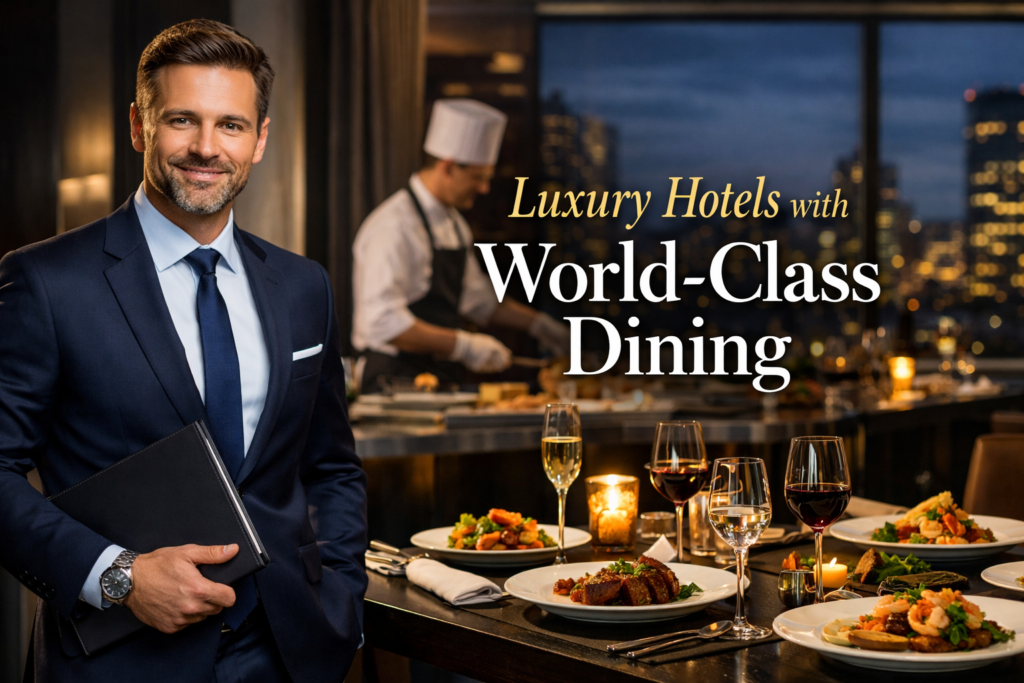
Luxury travel is no longer just about soft pillows, ocean views, and marble bathrooms. Today, luxury hotels with world-class dining have become the gold standard for premium hospitality, high-end travel experiences, and elite lifestyle branding. Travelers want more than a place to sleep. They want a destination that feeds the senses, excites the palate, and turns every meal into a memory worth sharing.
In many ways, a great luxury hotel works like a beautifully conducted orchestra. Every detail matters. The suite is the stage. The service is the rhythm. The dining experience is the headline performance that leaves the deepest emotional impact. That is exactly why world-class hotel restaurants now play such a powerful role in travel decisions, guest loyalty, and luxury brand perception.
For travelers, food adds meaning to a stay. For hotel brands, fine dining adds prestige, authority, and commercial appeal. For advertisers, this niche attracts affluent readers, premium buyers, and high-intent audiences interested in luxury travel, exclusive experiences, gourmet dining, and lifestyle upgrades. That makes this topic highly attractive from both an SEO and monetization standpoint.
Introduction
Luxury hotels have always symbolized elegance, comfort, and exclusivity. However, the modern traveler wants something deeper. A plush suite may impress at first glance, but a world-class dining experience is what often transforms a hotel stay from good to unforgettable. It adds character. It creates storytelling value. It gives the property a distinct identity in a crowded luxury travel market.
This shift has changed how travelers book premium accommodation. Many guests now search for luxury hotels based on the quality of the on-site restaurant, the reputation of the executive chef, the uniqueness of the tasting menu, or the visual appeal of a rooftop dinner experience. In other words, dining has become a core booking driver, not just an extra amenity.
That trend has opened a major opportunity for premium hospitality brands. Hotels that invest in fine dining are not simply serving food. They are building emotional connections, attracting affluent guests, boosting social media visibility, and increasing their appeal to luxury lifestyle advertisers. In a competitive digital landscape, that combination is pure gold.
What Defines a Luxury Hotel with World-Class Dining
A luxury hotel with world-class dining offers far more than a beautiful room and an expensive menu. It delivers a complete hospitality ecosystem where architecture, atmosphere, culinary craftsmanship, and personalized service work together seamlessly. Every touchpoint feels intentional. Every course feels elevated. Every space is designed to make the guest feel special.
The best properties understand that dining is not separate from the hotel experience. It is woven into the brand itself. From breakfast presentation to late-night cocktails, every culinary detail reflects the hotel’s standards. The ingredients are premium. The flavors are balanced. The service is polished. Even the smallest details, like table settings or wine temperature, signal excellence.
What truly sets these hotels apart is consistency. Anyone can create one impressive meal. The real mark of world-class dining is the ability to deliver excellence every day, for every guest, across every dining concept within the property. That consistency builds trust, strengthens reputation, and turns a luxury hotel into a destination known for culinary prestige.
More Than a Beautiful Room
A stunning suite may win attention, but it is the overall experience that wins loyalty. Guests remember the aroma of fresh truffle risotto, the elegance of a candlelit terrace dinner, and the confidence of a sommelier who pairs the perfect wine. Those moments shape perception. They turn a hotel stay into a rich and layered experience.
Luxury hospitality today is about emotional resonance. Guests want to feel immersed in beauty, comfort, and flavor. That is why dining matters so much. It fills the experience with texture. It gives the hotel its personality. Like a signature perfume, great cuisine lingers in memory long after checkout.
A Complete Sensory Experience
World-class hotel dining is deeply sensory. The lighting matters. The plating matters. The music matters. The scent of the room matters. A luxury restaurant inside a five-star property is designed to stimulate emotion as much as appetite. It invites the guest to slow down, indulge, and fully inhabit the moment.
Service, Design, Flavor, and Prestige
True excellence sits at the intersection of flawless service, refined design, unforgettable flavor, and strong brand prestige. When these elements align, the dining room becomes more than a restaurant. It becomes an extension of the hotel’s identity and a powerful asset for premium positioning.
Why Food Has Become a Major Luxury Travel Factor
Food has become one of the strongest decision-making factors in luxury travel because modern travelers want layered experiences. They do not want a hotel that merely looks expensive. They want one that feels authentic, cultured, and memorable. Fine dining provides that emotional depth. It makes a stay feel curated rather than generic.
Another reason is visibility. Dining experiences are highly shareable. A beautifully plated tasting menu. A private dinner overlooking the sea. A dramatic dessert presentation under soft golden light. These moments are irresistible on social media. They generate organic promotion, strengthen hotel branding, and create aspirational value that reaches future guests instantly.
Most importantly, food speaks to identity. Travelers increasingly see luxury as personal, not just material. They want quality, originality, and narrative. Dining gives hotels a way to tell a story through ingredients, culinary heritage, and creative interpretation. In that sense, a world-class restaurant is not just a revenue stream. It is a storytelling engine.
Travelers Now Choose Hotels for Restaurants
It is now common for travelers to research chefs, menus, and dining awards before booking a hotel. For many affluent guests, the restaurant can be the deciding factor. A premium suite may bring them in. A renowned dining concept may close the deal.
Dining as a Status and Lifestyle Experience
Luxury dining also functions as a lifestyle marker. It signals taste, refinement, and access. Guests are not simply buying a meal. They are buying atmosphere, exclusivity, and a sense of belonging in a premium world.
Signature Features of World-Class Hotel Dining
The most celebrated luxury hotels build their dining reputation on a few powerful foundations. First, they partner with exceptional culinary talent. Award-winning chefs, visionary pastry artists, and elite sommeliers bring authority and creativity to the table. Their expertise turns a meal into a crafted experience rather than a routine service.
Second, they prioritize ingredient quality without compromise. Premium seafood, artisanal cheeses, rare spices, heritage vegetables, and expertly sourced meats are not marketing gimmicks. They are essential tools in building flavor, trust, and culinary distinction. Guests notice quality immediately, and in luxury hospitality, that perception matters enormously.
Third, these hotels understand the value of originality. The best dining concepts are not copies. They have a point of view. Some lean into regional heritage. Others embrace modernist techniques. Some create intimate chef’s table experiences. Others focus on dramatic rooftop elegance. The common thread is identity. Great hotel dining feels unmistakably itself.
Award-Winning Chefs and Curated Menus
A respected chef adds both credibility and excitement to a luxury hotel. Guests associate culinary leadership with quality, innovation, and prestige. Curated menus, seasonal specials, and tasting journeys keep the experience dynamic and memorable.
Premium Ingredients and Seasonal Sourcing
The foundation of every outstanding meal is ingredient integrity. Luxury hotels that source fresh, seasonal, and premium ingredients consistently deliver better flavor and stronger guest satisfaction.
Farm-to-Table and Ocean-to-Plate Excellence
Today’s premium travelers value freshness and transparency. Farm-to-table vegetables and responsibly sourced seafood add both quality and narrative, making the dining experience feel refined and relevant.
How Luxury Hotels Design Memorable Dining Experiences
The most successful luxury hotels know that great dining is not built on flavor alone. It is also about setting, pacing, and emotional choreography. A dramatic entrance, elegant lighting, attentive staff, and thoughtfully timed service all shape the guest journey. Like a well-written novel, the best meals unfold with rhythm and purpose.
Design plays a major role in this process. A panoramic rooftop restaurant creates a different emotion than a hidden garden dining room. A sleek modern steakhouse communicates confidence and glamour. A serene Japanese omakase room suggests focus and intimacy. The setting frames the meal and helps define the guest’s emotional response.
Luxury hotels also excel at offering variety within the same property. One guest may want a formal tasting menu with wine pairings. Another may prefer an all-day brasserie with polished comfort food. Another may seek private in-suite dining with personalized service. By offering multiple premium formats, hotels broaden appeal while maintaining brand consistency.
Atmosphere, Architecture, and Ambience
Ambience is the invisible ingredient that transforms a meal. Beautiful interiors, refined acoustics, artistic presentation, and scenic views all work together to create emotional depth and premium appeal.
Private Dining, Chef’s Tables, and Rooftop Venues
Exclusive dining spaces make guests feel valued. Whether it is a chef’s table, a candlelit private room, or a rooftop overlooking the skyline, exclusivity enhances both satisfaction and perceived luxury.
The Role of Personalized Service in Elite Hotel Restaurants
In luxury dining, service is not just functional. It is theatrical, emotional, and deeply strategic. Guests expect staff to anticipate needs without becoming intrusive. They want confidence without arrogance. Warmth without awkwardness. Precision without stiffness. When service reaches that level, it becomes invisible magic.
Personalization is now one of the strongest drivers of guest delight. Remembering a guest’s favorite wine. Adjusting a tasting menu for dietary preferences. Offering tailored recommendations based on mood or occasion. These actions may seem small, but they create a sense of intimacy that guests remember and reward with loyalty.
This level of care also has commercial power. Guests who feel seen are more likely to extend their stay, recommend the property, and return for future visits. In a market where competition is fierce, personalized service is not a luxury extra. It is a revenue-generating advantage.
Tailored Recommendations and Wine Pairings
Expert recommendations help guests feel guided rather than overwhelmed. A great sommelier or restaurant manager can elevate the evening with thoughtful pairings and personalized insight.
Attention to Guest Preferences and Dietary Needs
Today’s world-class dining experience must be flexible and inclusive. Hotels that respond elegantly to allergies, wellness goals, and dietary lifestyles show true hospitality excellence.
Luxury Hotels That Use Dining as a Brand Advantage
Some luxury hotels understand that dining is not just an amenity. It is a strategic branding pillar. A famous restaurant can give a property instant authority, attract media coverage, and create a halo effect across the entire hotel. Suddenly, the brand is not only known for rooms. It is known for taste, culture, and prestige.
This matters because branding in luxury hospitality is emotional. Guests do not buy features alone. They buy identity. They choose hotels that align with who they are or who they aspire to be. A strong culinary reputation helps a property occupy a more desirable position in the guest’s imagination.
From an advertising standpoint, this creates strong commercial appeal. Content around luxury hotels, gourmet dining, chef-led experiences, exclusive travel, and fine lifestyle products attracts premium readers and high-value advertisers. That means better monetization potential, stronger affiliate appeal, and more interest from brands targeting affluent consumers.
Building Prestige Through Culinary Identity
A hotel with a clear culinary identity stands out faster. It becomes easier to remember, easier to recommend, and easier to market across search, social media, and premium travel publications.
How Dining Helps Hotels Attract High-Value Guests
Affluent guests often seek experiences that combine comfort, exclusivity, and quality. World-class dining checks all three boxes, making it a powerful attraction for luxury travelers with high spending power.
Tips for Choosing the Best Luxury Hotel for Dining
If dining is one of your top priorities, do not book based on star rating alone. Look closely at the restaurant concept, chef background, menu quality, guest reviews, and dining atmosphere. A hotel may look luxurious online, but the culinary program reveals whether the experience is truly elevated.
It also helps to consider the kind of dining experience you want. Are you searching for a Michelin-style tasting menu. A romantic oceanfront dinner. A stylish rooftop lounge. A wellness-focused gourmet menu. A family-friendly luxury brunch. The best hotel for one traveler may not be the best for another. Clarity makes the search smarter.
Finally, think beyond price. The room rate is only one piece of the value equation. If the hotel offers unforgettable dining, seamless service, beautiful design, and memorable culinary moments, the experience may justify every dollar. In luxury travel, value is not about cheapness. It is about meaningful excellence.
Check the Chef, Concept, and Reviews
The chef’s reputation, menu originality, and guest feedback can tell you a great deal about the restaurant’s quality before you book.
Look Beyond the Room Rate
A slightly higher rate may deliver much better overall value if the dining experience is exceptional and included as part of the hotel’s premium positioning.
Value Comes from the Entire Experience
A luxury stay should feel complete. The best properties succeed because the room, service, and dining all support one another beautifully.
Conclusion
Luxury hotels with world-class dining represent the future of premium hospitality. They do not simply offer a bed and a meal. They create immersive experiences where comfort, cuisine, atmosphere, and service blend into something unforgettable. That is why travelers love them, brands invest in them, and advertisers value the audience they attract.
In today’s luxury travel landscape, dining has become the heartbeat of hotel identity. It influences booking decisions, strengthens guest loyalty, increases social visibility, and elevates brand prestige. A world-class restaurant can transform a beautiful property into a legendary destination.
For anyone seeking refined travel, memorable culinary experiences, or premium hospitality insights, this niche remains one of the most exciting and commercially powerful in modern tourism. When a luxury hotel masters dining, it does more than serve dinner. It serves desire, distinction, and lasting emotional impact.
FAQs
1. Are luxury hotels with world-class dining worth the price?
Yes, they often are. You are paying for more than food and accommodation. You are investing in service, ambiance, ingredient quality, culinary expertise, and a complete luxury experience.
2. What should travelers look for in a hotel restaurant?
Look for chef reputation, menu creativity, ingredient quality, guest reviews, service standards, and the overall dining atmosphere. These factors usually reveal the true quality of the experience.
3. Do luxury hotel restaurants accommodate dietary restrictions?
Most high-end hotel restaurants do. In fact, many luxury properties excel at customizing meals for dietary preferences, allergies, and wellness-focused lifestyles.
4. Can non-guests dine at world-class hotel restaurants?
Yes, many luxury hotel restaurants welcome outside diners. Some of the most famous hotel dining venues even attract local food lovers more than overnight guests.
5. Why is this topic attractive for advertisers?
Because it targets affluent readers interested in luxury travel, premium services, gourmet dining, hospitality, lifestyle products, and high-end experiences. That audience is valuable to premium advertisers.